Shadow And Act on Facebook

Away We Go – Sisters in a White World

ejogo-rudolph-away-we-go

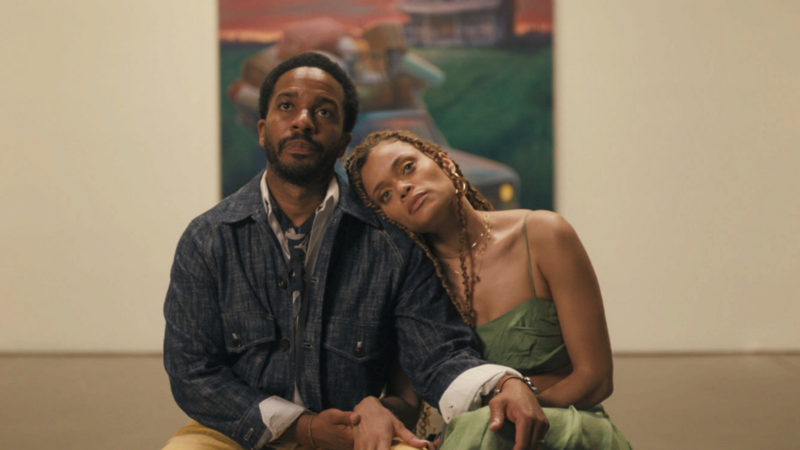
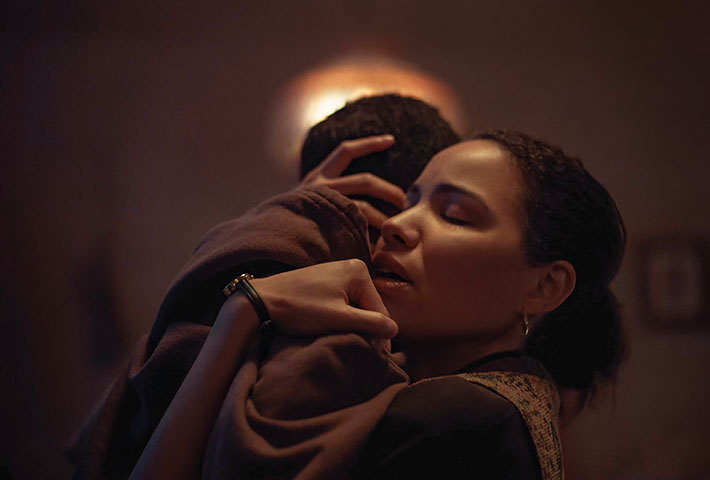
Last Friday, Sam Mendes‘ bittersweet comedy opened in US cinemas with a limited release. Away We Go is about an unmarried couple expecting their first child who travel around the U.S. to find a perfect place to start their family. Along the way, they have misadventures and find fresh connections with an assortment of relatives and old friends who just might help them discover “home” on their own terms for the first time. Something that doesn’t seem to be made a particularly big deal of, whether in the movie itself or in most of the previews, trailers and snippets of info I’ve read about Away We Go over the last month or so, is the fact that the lead female role is played by an African-American.

Granted, Maya Rudolph is actually only half African-American (daughter of late soul songstress Minnie Ripperton and Jewish composer and songwriter, Richard Rudolph) but given the hoopla not so long ago (and still) over the election of America’s first African-American president (also only half African-American), does this mean that we really have reached the mythical age of post-racial, colour-blindness? Much has been made of colour-blind casting this decade in Britain – albeit mainly on stage and in subsequent articles in the UK press. So, seeing as Mendes is British and has a well established and much respected career as a stage director in his home country, maybe casting Rudolph opposite John Krasinski is not such a big deal after all – at least that’s what most people seem to be making of it – and maybe that’s a good thing. Mendes isn’t new to casts that aren’t all-white – Jamie Foxx starred in Jarhead and Mendes produced Things We Lost in the Fire, starring Halle Berry – so I’m certainly not suggesting that there’s anything to get ones knickers in a twist over.

Certainly two people to be glad for are Rudolph and the person who plays her sister in the film, Carmen Ejogo.

In an interview with the Huffington Post, it is noted that the role of Vanessa (Rudolph’s character) is a unique, well written character, the kind of female character that we don’t see too frequently and, in response to why she thinks this is so often the case, Rudolph replied:

“I don’t know why that’s either untapped or overlooked or not done well because there is really no excuse for it. This is a perfect example of it. It’s not as if women don’t exist. I will say that in general there is a lot of crap in the world. It wasn’t until I was thrown in the water on day 1 of Saturday Night Live where they said you write for yourself. That’s what everyone does. I learned the enormous power of writing for yourself, especially now that people seem to be receptive to the fact that women can write.”

And on why we don’t see more films with African American women leads:

“It’s certainly not for me to answer because I have nothing to do with why the world is as fucked up as it is. It has less to do with TV and movies and more to do with race and history and culture. It’s obviously a reflection of the world we live in. Although I still can’t believe we have a president who is mixed like me. It’s one thing that we have a black president but for me it’s even crazier because he’s mixed. I feel like I come from a smaller off shoot of black people because I am mixed. People say I’m African American but that doesn’t include the other half of me.

I can’t believe I’m living in a time where I feel proud of my president where I feel like things are actually positive and people feel good about where our country can be.

I don’t know the answer to your question and I don’t know if there is one. I plan to keep doing what I’m doing because race is just not a part of the way I look at the world and the way I live my life. I think that was a minor, key thing in the way that Dave and Vendela wrote the script. Verona is mixed and Burt is white but nobody talks about it. That felt realistic to me in my day to day life. People expect race to be an issue and I was raised in a house where it was never as issue. My parents were interested in having us feel like we were normal whatever that is.”

And over on Cinema Blend, Ejogo (also half black – I hesitate to use the term “African-American” as she’s British, of Scottish and Nigerian parentage) had this to say about the interracial theme not being overtly discussed in the movie:

“Absolutely, love it. Feel that we’re finally at a stage, not just within the world of movies but in real life, that we’re going past a certain cliched conversation about race. That’s not to deny that there are still real issues to be dealt with, but it’s a different kind of conversation, and it’s sideline stuff for me. Growing up in London, with a hippie mom, I don’t know that I’m most people’s definition of what a black person is. I’m mixed, yes, but in the world I’m defined as black before I’m defined white. I’ve never been called white. I’m just excited that in a film like this, that mixed people, black people, whatever people are being given the space to be idiosyncratic, and have a breadth of emotions, and not be related back to how that is informed by your being black. It’s really liberating to see a piece of material like this out in the world, and i just hope there’s more of it. I’ve been craving that stuff my whole career, and there’s not been enough of it. As an artist, there’s so many categories that you’re put into, that there are so many things that I”m about that I’ve never explored as an artist on film. I don’t see myself in so many characters in film. I think that’s changing with films like this.”

But I can’t help but wonder whether, apart from the middle class angst which seems common in many of Mendes’ films, it seems a tad unrealistic in Away We Go to ignore the issue of race altogether. From American Beauty, Revolutionary Road and now Away We Go, it seems Mendes is fascinated with, and good at, looking at the various stages and preoccupations of middle-class relationships. In fact, taking these three movies, it seems that he’s worked his way backwards from long-time married and totally over the illusion of happy ever after; to short-term married and losing, or struggling not to lose, oneself to the illusion of happily ever after suburban married bliss; and finally, with Away We Go, brand new to it all and trying your darnedest to make sure that you stand as little chance as possible of reaching any of the aforementioned stages.

Perhaps in a future Mendes film we’ll have a pre-pre-prequel of middle class relationships in which a black family raise their kid and a white family raise their kid and the kids meet in college and fall in love. If so, I’d like to think that as much time will be spent with the black family as with the white family and that, at least, everybody doesn’t have on rose-tinted glasses which render them all colour-blind – unless, of course, they’re living in a parallel universe.

You can read Maya Rudolph’s and Carmen Ejogo’s interviews on the Huffington Post and Cinema Blend websites respectively, and you can watch the Away We Go trailer below.

Away We Go opens in the UK on September 18th.

14 comments to Away We Go – Sisters in a White World

  • Awesome quotes! As a mixed person I can totally relate. It’s a rarity when I see someone who looks like me on the big screen who’s playing an offbeat character. Films like this make me excited about the future of cinema!

  • AccidentalVisitor

    Mendes grew up in Trinidad so he may be more open to racia diversity. What would be interesting to know is if the role Myra plays was written as white, black, mixed, etc. If it was written as white then it almost seems natural to just keep race out of the script once Myra was cast because it originally played no part at all.


    Granted, Maya Rudolph is actually only half African-American (daughter of late soul songstress Minnie Ripperton and Jewish composer and songwriter, Richard Rudolph) but given the hoopla not so long ago (and still) over the election of America’s first African-American president (also only half African-American), does this mean that we really have reached the mythical age of post-racial, colour-blindness?

    Of course not and I’m sure you realize that, MsWOO. The casting of someone like Myra in this type of role alongside an all white cast isn’t the norm. To be honest I also don’t feel it needs to be. If a screenwriter envisions characters to be white then I’m one of those who likes to stick to the screenwriter’s vision. But of course that would mean the opportunities for black actors/actresses would plummet greatly because the default race for main characters in 99% of the films is white. So I’m conflited there. And I stand by the opinion that the ultimate true example of color-blind casting is when you have a rising young white starlet or an established white actress as the lead in, say, a romantic comedy and the object of her affection, although written as a white male, is cast as a black guy or an Asian dude. Because while casting a woman of color for a white male lead is still not the norm and somewhat bold, it is and always has been the pairing of a white woman with a non-white male in a film that has always made Hollywiood more nervous.

    The film is getting good reviews and I plan on checking it out in the enxt week or two. I was wondering if this site was going to do a writeup about it. But now I’m still waiting on a writeups of independent films like “Sugar” and “Goodbye Solo”.

    • Ha! I knew about Mendes’ Trini background, but it totally escaped my mind.

      As to the writers, they’re a couple of novelists, and an actual couple – mixed raced woman and white man. So my guess is that they must have made a concerted effort not to make race an issue.

      However, I can’t help thinking that, if they were visiting friends and family across the US, they must have had at least one black (or mixed-race) friend and more than one black relative to visit. It just seems so very black/mixed-race female living in a very white world in which her difference (which I find it hard to believe hasn’t been noted by anyone in their circle of family, at least) isn’t mentioned.

      It reminds me of a black friend of mine who said she got tired of dating white guys because it was tedious with his friends and relatives assuming that she was happy to go along with everything they thought and did and that that was alright, while she didn’t necessarily feel free to celebrate who she is without them thinking she had a chip on her shoulder or was ungrateful for being let into their world.

      I don’t know… maybe being a mixed raced female in a relationship with a white male dilutes the issue somewhat.

      Of course, if they DID make a concerted effort not to make race an issue, then that in itself speaks volumes.

      I’ll certainly be checking it out when it comes to the UK. Themes of race or not, it’s the kind of movie I’d watch anyway.

      • AccidentalVisitor

        As to the writers, they’re a couple of novelists, and an actual couple – mixed raced woman and white man. So my guess is that they must have made a concerted effort not to make race an issue.

        Interesting. Because when I saw the pictures of the writing duo I would have never thought she was mixed at all. I wonder what is the mix because based upon these pictures (below) I would not guess an African or even Asian ancestry to go along with a white/European one. That would perhaps explain her way of thinking because she doesn’t look ethnic (non-white I mean) at all and perhaps that meant it wasn’t a real issue for her in the first place. Therefore she didn’t make it a real issue in the movie.

        http://images.google.com/images?hl=en&q=%22Vendela%20Vida%22&um=1&ie=UTF-8&sa=N&tab=wi

        http://www.imdb.com/media/rm378046464/nm2905972

        • Boy, she doesn’t look mixed at all! Well, at least not an African-mix…

          I’ll check to see if i can re-find where I read she was mixed-race.

        • OK, couldn’t find my original source regarding Vida’s mixed-race background but, from another article, it turns out she’s half Swedish and half “American.” I’m guessing, from the surname (which isn’t her husband’s), that her American father is of Spanish/Latin origin… So I guess that’s mixed heritage… but related more to culture than to colour.

    • I planned on seeing Goodbye Solo this weekend but was busy with some other stuff. It’s on my list though!

      And for a nice interview with the writer of Away We Go check out http://womenandhollywood.com/2009/06/02/interview-with-vendela-vida-novelist-and-co-writer-of-away-we-go/

      She said she wrote the script with Maya Rudolph in mind.

  • AccidentalVisitor

    Forgot to mention that I’m happy to see Carmen Ejogo back on the big screen. Its been awhile I believe. Not the strongest actress in the world but very pretty to look at. Yes, I’m shallow sometimes.

    • *shakes her head in silent resignation*

      lol.

      To be honest, haven’t really seen her in much. Only thing that comes to mind is Lakawana Blues and her over the top histrionics in that didn’t exactly do much for me, but I’m not sure if that was the quality of her acting or the direction she was given. So yeah, it will be great to see her in another role, especially as she mentions in her interview that she was “the person who lends the movie its sort of more emotional weight, but doesn’t rely on humor.”

      So maybe she’s improved somewhat. I’d like to think that her brilliant actor of a husband, Jeffrey Wright, would have some influence on her. We’ll see…

  • I can’t wait to see this film. That’s all I wanted to say.

  • does this mean that we really have reached the mythical age of post-racial, colour-blindness?

    No.

    That’s all :o )

  • NothingButAMan

    “…given the hoopla not so long ago (and still) over the election of America’s first African-American president (also only half African-American)…”

    Well, if we’re going to split hairs, Obama is half African, but 100% American…

    I completely respect where Rudolf and Ejogo are coming from, but it concerns me whenever people, artists in particular, choose to skirt the race conversation, insisting that they are “over it”, not to imply that that’s what they’re doing… I agree with Ejogo that it’s a different conversation than what we’re used to in the old paradigm, but it’s a conversation that definitely needs to happen.

  • lilkunta

    sam mendes was raised in trini or is of trin descent? was he amongst the true people of the island ( the native afro trinis & indo-trinis) or was he in some gate anlgo enclave?

Leave a Reply


You can use these HTML tags

<a href="" title=""> <abbr title=""> <acronym title=""> <b> <blockquote cite=""> <cite> <code> <del datetime=""> <em> <i> <q cite=""> <strike> <strong>